Cooling load calculation
Glazing, orientation, people, equipment, lighting. Sizing by floor area is a lottery: a room with full-height glazing facing south and the same room facing north need different things.
Home/Air conditioning
◆Service 03 · Air conditioning
We calculate the cooling loads, select a system that fits the brief and the budget, design the pipe routes, install, commission and service it.
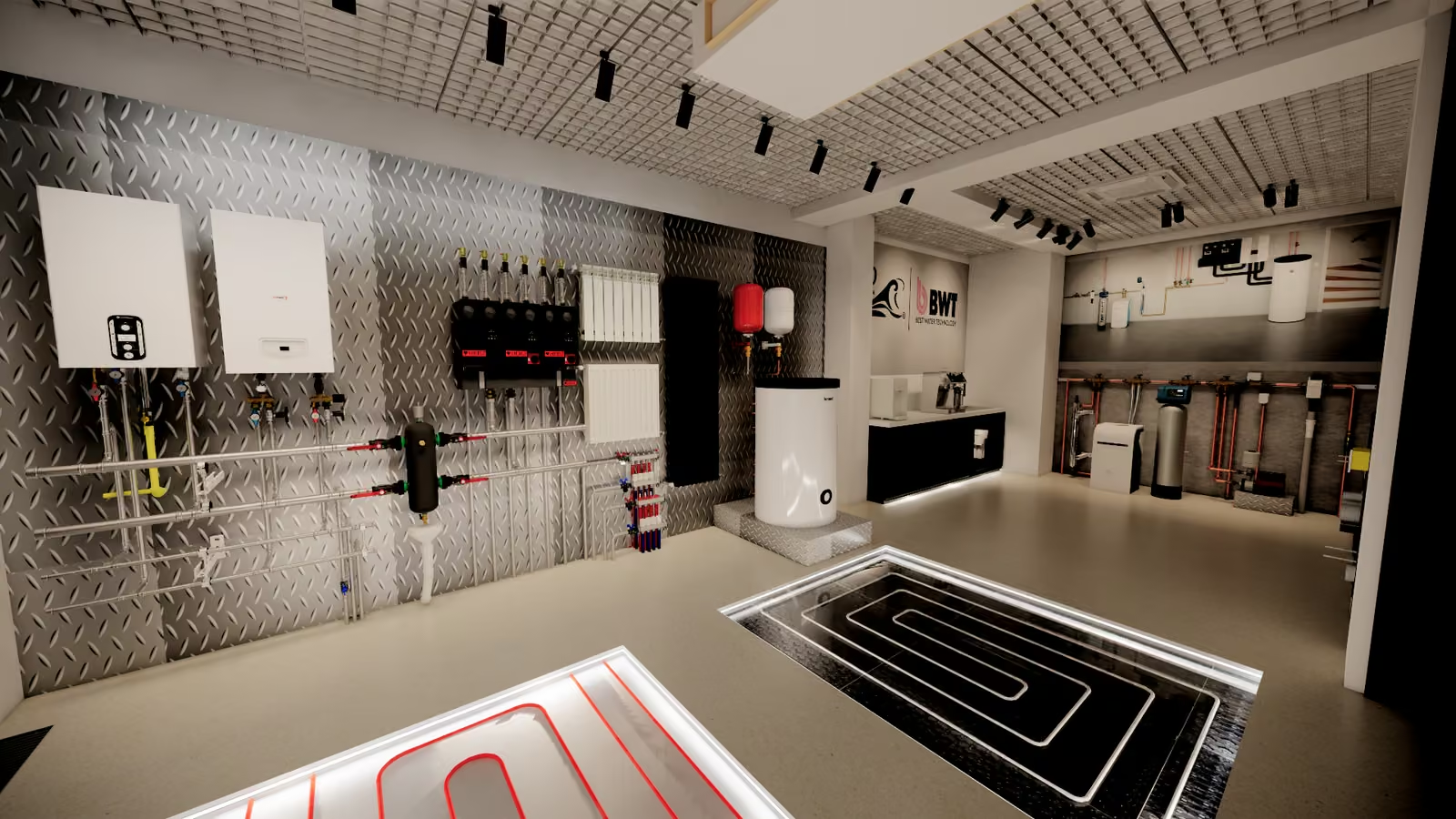
Glazing, orientation, people, equipment, lighting. Sizing by floor area is a lottery: a room with full-height glazing facing south and the same room facing north need different things.
Multi-split, VRF or chiller and fan coils is decided by the number of rooms, how they are used through the day and whether heating and cooling are needed at the same time on different floors.
Risers, refrigerant distribution, drainage with fall, routes out to the condensers. Drainage laid without fall is the most common reason for stains on a ceiling.
Indoor and outdoor units, evacuation, pressure testing, charge adjusted for line length. The work is concealed, so every pressure test is recorded.
Ducted above the ceiling, cassette or wall-mounted. Placed so the airflow does not blow straight at anyone.
Start-up, mode checks, controls set up, scheduled cleaning and maintenance by our own department.
Multi-split takes five or six indoor units on one condenser. An apartment, a house, a small office. Cheaper to enter, but limited on pipe length and unit count.
VRF carries dozens of indoor units on one set of pipes, runs long risers, and can heat some rooms while cooling others. That is a building, not an apartment.
Chiller and fan coils use water instead of refrigerant. It earns its place where the runs are very long, where fire safety matters, and where cooling is also needed for a process.
The first question is never “which brand” — it is how many rooms there are, how they are used through the day, and what happens on site in winter. The brand is chosen last.
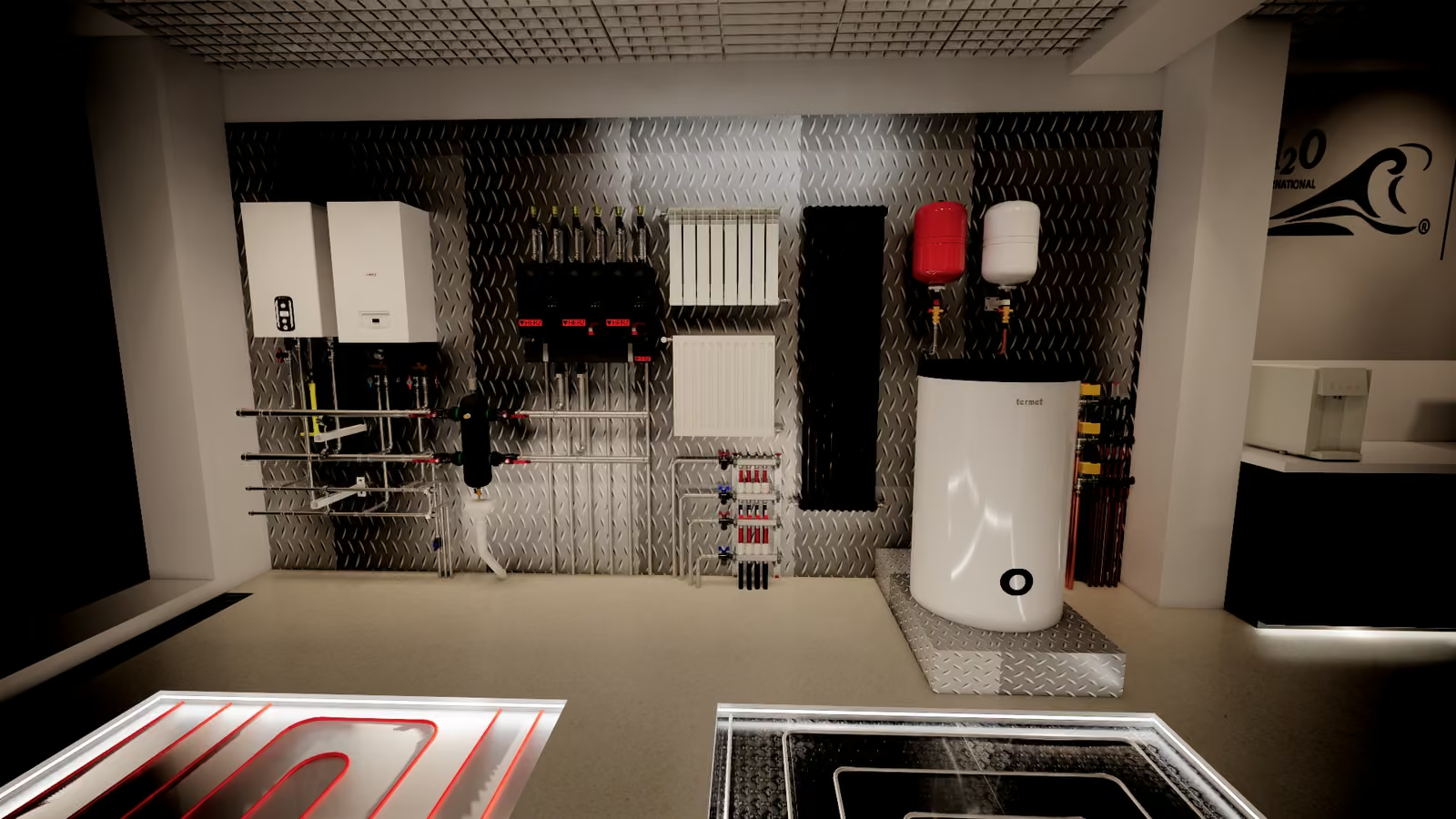
| System | Where it fits |
|---|---|
| Multi-split | up to 5–6 indoor units: apartment, house, small office |
| VRF | dozens of units, long pipe runs, simultaneous heating and cooling |
| Chiller and fan coils | water instead of refrigerant: large buildings, long runs |
| Ducted, cassette and wall units | chosen for the ceiling type and the air distribution |
| Fan convectors and air curtains | Kampmann |
| Controls, thermostats, phone control | ENGO |
















It does dry the air: moisture condenses on the cold coil and drains away. That is physics, not a fault in the model.
The fix is the operating regime, not the brand: do not push the setpoint down to 18 °C, and bring in fresh air. In a dry room the culprit is usually a ten-degree difference, not the unit itself.
Wall units, yes — but the pipework will run in a casing or along the facade. Hiding it neatly inside a finished wall is no longer an option.
Ducted and cassette units need a ceiling void and pipework laid in advance, so they are planned before the finishes go on.
Nine times out of ten it is the drain: either the fall was not held, or the line has silted up with biofilm, or the pump is not coping.
Less often it is a blocked filter: the coil ices up, and when it thaws the water runs past the tray.
Down to a certain outdoor temperature, yes — inverter units heat below zero. But as it gets colder the output falls and the consumption rises.
As the only heat source in a Tashkent January that is not dependable. The sensible arrangement is heating that carries the house and air conditioning that works in the shoulder seasons.
At least once a season, before summer: filters and coil cleaned, pressures and drainage checked.
A dirty coil costs you capacity and electricity at the same time — and produces the smell you get on start-up.
Send the plan and what each room is for — we will come back with the cooling load and system options. It is free and commits you to nothing.